Head Office & Works
SY. NO. 103/1, BESIDE JAIN INTERNATIONAL SCHOOL, KUCHARAM(V), TOOPRAN(M), MEDAK DIST.-502381.
An electric hoist is an electric-powered mechanical lifting tool, which is a motor-driven hoist, used to lift, lower and manoeuvre heavy materials with accuracy and safety. It is largely applied in the manufacturing, construction, warehousing, mining and logistics industries. Electric hoists are commonly suspended on overhead beams, gantry cranes or jib cranes and are very significant in material handling processes.
Electric hoists are much more efficient than manual ones, they cause less physical impact on the workers and their work place is much safer. They are also a vital part of the contemporary industrial processes due to their capacity to lift heavy volumes of products at all times.
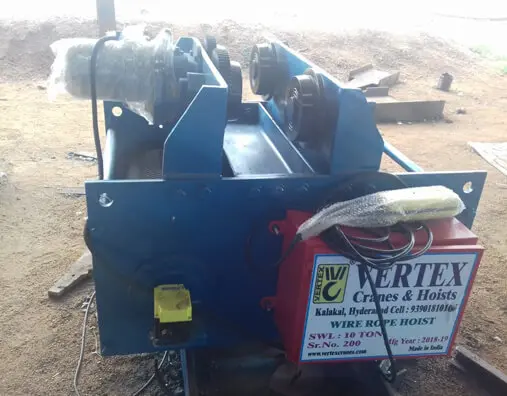
A hoist with electricity is composed of a number of important elements:
The lifting mechanism is motor-driven enabling the hoist to lift or lower the loads either on a wire rope or load chain. The majority of electric hoists have an inbuilt safety system including overload protection, emergency pauses and limit switches to minimise over-travel.
Electric hoists are mostly divided in terms of lifting mechanism and the way in which they operate.
Electric chain hoists lifts are operated by a hardened steel chain. They are small, light and can be used in short lifting height and moderate weight.
Advantages:
They are usually found in car repair shops, assembly and even on maintenance work.
Electric wire rope lift hoists are based on a steel wire rope coiled around a drum. These hoists have increased lifting capacities and lifting heights.
Advantages:
The wire rope hoists are normally employed in steel plants, construction sites, shipyards, and in large manufacturing plants.
A monorail hoist is operated by one overhead beam and is best suited to transport a load on a permanent path inside a plant. Best suited for:
Electric hoists find application in a vast industry with regard to its versatility and efficiency.
The use of electric hoists has greatly minimised manual labour in all these areas and enhanced efficiency in working conditions.
The use of the correct electric hoist should be carefully considered in terms of the requirements of its operation. Some of the factors to be considered are important and they include below:
Environmental conditions are things like dust, moisture, chemicals, or places where things can explode. In dangerous places, hoists that are made for those places may be needed.
These benefits render the electric hoists an economical and viable choice to industrial lifting.
Electric hoist is a heavy weight and indispensable lifting solution to industries, which need safe and efficient handling of materials. They come in different types including chain hoists and wire rope hoists to suit the load capabilities and working requirements. With the very keen attention to such aspects as load capacity, lifting height, duty cycle, and environmental conditions, businesses can find the most appropriate one among the electric hoists to operate in their business.
An electric hoist is a powered lifting device that uses an electric motor to lift, lower, and move heavy loads vertically. It typically operates using a chain or wire rope wound around a drum. Electric hoists are commonly mounted on overhead beams, cranes, or gantry systems to streamline material handling in industrial environments.
The two primary types of electric hoists are wire rope electric hoists and chain electric hoists. Wire rope hoists are ideal for heavy-duty applications and higher lifting heights, while chain hoists are compact, cost-effective, and suitable for lighter loads and shorter lifting distances. Each type is chosen based on load capacity, speed, and application requirements.
Electric hoists are widely used in manufacturing plants, warehouses, construction sites, automotive workshops, shipyards, and logistics centers. They help lift machinery, raw materials, finished goods, and heavy components safely and efficiently.
Key selection considerations include load capacity, lifting height, duty cycle, operating environment (indoor/outdoor), power supply, lifting speed, safety features, and maintenance requirements. Choosing the right hoist ensures optimal performance, workplace safety, and long-term cost efficiency.